How to Actually Grab Original Audio from Instagram Reels (Without Losing Your Mind)
You know that one reel where the audio is the whole point?
Not the transition, not the caption that one line, that original voice, that weird sound you can’t get out of your head.
Here at Hivepye Teams, we live in the strangely specific niche of “you just want to download what platforms clearly don’t want you to download.”
And original audio on Instagram Reels is the most annoying version of that. It’s not just a song you can Google it’s some creator’s voice, remix, or sound that only exists inside this one reel.
The problem: Instagram makes it easy to “use” that audio inside Instagram, but not to actually save it as a file you can control.instagram+1youtube
So if you’re trying to find, save, and download original audio in 2026 not random songs, but those “Original Audio” clips this is the guide you actually need.
THE THING NOBODY ACTUALLY SAYS OUT LOUD
Let’s be honest: when people say “original audio,” half of them don’t know what they’re talking about.
Instagram slaps “Original audio” on everything from your random mumbling into the mic to imported music that isn’t in the Instagram library.linktryoutube
Here’s the quiet truth you figure out only after you’ve been using Reels for a while:
- “Original audio” basically means: this clip isn’t from Instagram’s pre-loaded music library.
- It could be your voice, someone else’s talking, a sound pulled from a YouTube video, or a custom music track that creator imported.youtubelinktr
- Instagram is very happy for you to reuse that inside the app… and very uninterested in letting you download it properly.youtubeinstagram
Most polished guides talk endlessly about “trending songs” and “top audio.”
They almost never go into the weird reality that the most reused sounds on Reels are often these random “Original audio” bits a sentence, a meme, a background hum that you can’t just search on Spotify.buffer+3
You’ve probably seen this pattern:
- A small creator posts a reel with “Original audio.”
- It somehow goes viral.
- Everyone starts using that exact sound on their own reels.
- Now there’s a whole trend built around a voice note that lives only inside Instagram.later+2
And here’s the thing nobody says out loud because it sounds a bit too honest:
Most people looking to download original audio are not stealing music they’re trying to use that sound across multiple platforms, edit it properly, or just study it without being glued to Instagram.
You’re not planning to start a music piracy empire. You just don’t want your creative workflow tied to a single app UI that crashes at random.
The daily-life reference:
This is the same energy as screenshotting a tweet to use in a slideshow.
You could just link it, sure. But you want control to crop, reorder, analyze, bring it into your own world. Original audio from Reels is like that, just with sound instead of text.
Now, the part everyone quietly avoids: copyright.
If the “original audio” is literally someone else talking, or noise you recorded yourself, you’re usually in safer territory.
If the creator used imported music or ripped audio from somewhere else, that “Original audio” label doesn’t magically make it legally clean.foximusic+3youtube
Instagram’s own guidance is clear: the safest way to avoid copyright issues is to post content you created or have rights to that includes music and audio.instagram+1
So when you download or reuse a random original audio from a stranger’s reel outside Instagram, you’re in “experience and judgement” land, not guaranteed safety.
Original doesn’t mean free it just means Instagram doesn’t know where it came from.
HOW THIS ACTUALLY WORKS THE REAL MECHANICS
To find and download original audio from Reels, you need to understand two separate pieces:
- How Instagram handles original audio inside the app.
- How tools and workflows outside the app let you turn that into an actual file.
How Instagram treats “Original audio”
When you create a reel and use your own voice or upload your own sound file (import), Instagram tags it as “Original audio – [your username]”.linktryoutube
Creators can:
- Record voiceover directly in the Reels editor.linktr
- Import audio from a video in their gallery and use that as the sound.youtubelinktr
- Mix multiple layers music, original voice, effects and publish the reel.youtube+1linktr
Once published:
- Other users can tap on the audio name under the reel and see all reels using that audio.instagramyoutube
- They can tap “Use audio” to create their own reel with that sound.youtubeinstagram
- They can save the audio inside Instagram to use later, but not as a downloadable file.youtubebuffer+1
Instagram also exposes trending original audio if you have a professional account, you can see “Trending audio” in your professional dashboard and see suggestions, some of which are tagged original.buffer+2
So: inside Instagram, “finding” original audio is more or less solved.
The app wants you to use and reuse it… as long as you don’t try to take it outside.buffer+1youtube
How you actually download that original audio
Outside Instagram, you have roughly three realistic options:
- Use an audio downloader for Reels (link → MP3).
- Use screen recording and then extract audio.
- Use import workflows to bring your own original audio into Instagram, then keep the source file yourself.fastvideosave+1youtube+1
- Audio downloader tools (Fastvideosave, Reelsave Audio, etc.) don’t care whether a reel uses a song from the library or “Original audio.”
They just see a video file, pull it from Instagram’s servers, and convert its audio track into MP3.reelsaveyoutubefastvideosave
Typical downloader flow:
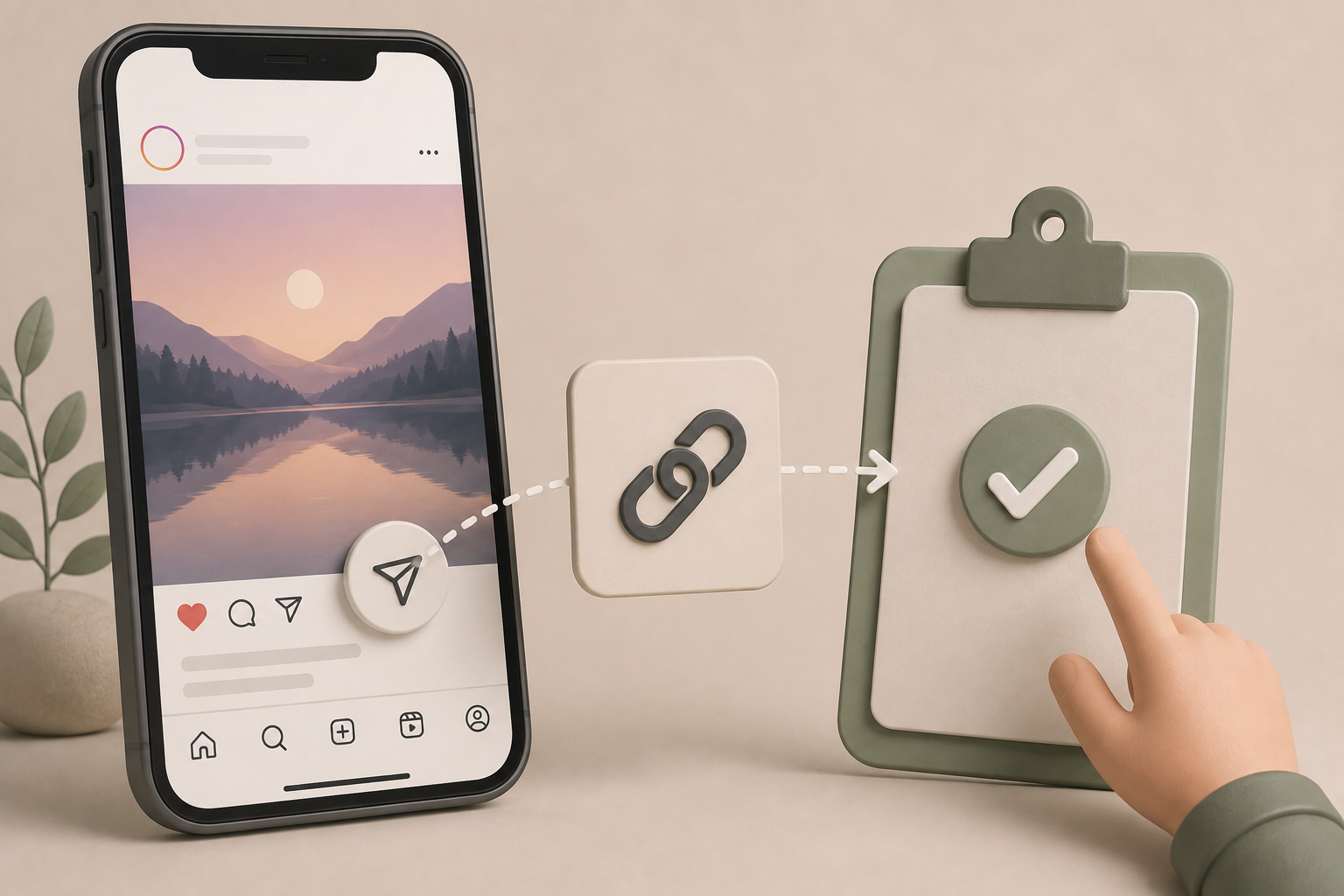
- Copy the link to the reel with the original audio.youtubereelsave
- Paste it into an audio downloader page.
- The tool processes the reel and gives you a “Download audio” button.
- You get an MP3 containing whatever that reel’s audio is original voice, music, mixed sounds.fastvideosave+1youtube
Screen recording is the fallback:
- Record your phone or desktop while playing the reel.pcmag+1youtube+1
- Save the screen recording.
- Extract the audio in an editor, cut the section you want, and export.youtube+1
Niche angle almost no generic article touches:
If you created the original audio yourself you recorded a voiceover or imported a clip the cleanest workflow is not “download from Instagram.”
It’s: keep your original source file, then treat Instagram as a distribution channel, not your archive.youtubelinktr
Short list with actual opinions:
- Using Instagram’s “Use audio” button
Great for staying inside the app and joining trends, useless if you want an actual file.instagramyoutube - Using audio downloaders for original audio
Best when you want that specific sound in MP3 to edit in CapCut, Premiere, VN, or anything outside Instagram.reelsave+1youtube - Screen recording for original audio
Backup for stubborn cases (stories, lives, glitchy download tools) slower and messier, but works everywhere.flexclip+1youtube+1 - Creating and importing your own original audio
The only method where you fully control the source and don’t rely on downloading at all.youtubelinktryoutube
Real observation from people who actually edit:
The more serious your content gets, the less you want Instagram to be the only place your audio exists.
You want a clear path from source file → edit → upload, and “downloading from a reel you already posted” becomes a last resort, not your main workflow.youtubelinktryoutube
COMPARISON WHAT'S ACTUALLY DIFFERENT BETWEEN YOUR OPTIONS
| Option | What it actually does | Who it's for | The catch |
| Instagram “Use audio” + save inside app | Lets you reuse original audio in new reels without downloading | People who only create inside Instagram | No MP3 file; audio stays locked in the app ecosystem instagramyoutube |
| Reel audio downloaders (Fastvideosave, Reelsave Audio, etc.) | Convert reel (including original audio) to MP3 via link | Creators who edit in external apps, multi-platform users | Third-party tools; link copy–paste; must avoid fake download buttons fastvideosave+1youtube |
| Screen recording + audio extraction | Records playback of the reel’s audio (and visuals), then lets you extract | People who need a backup for stubborn or time-limited content | Real-time recording, risk of noise/notifications, extra trimming steps youtube+1pcmag+1 |
| Importing your own original audio into Reels | Uses audio you already have as source and makes it “Original audio” in-app | Creators who start from external audio, then post to Instagram | Requires you to manage your own audio files properly outside Instagram linktryoutube+1 |
My recommendation: treat downloaders as your default for grabbing someone else’s original audio, and imports as your default when the original audio is yours.fastvideosave+2youtube+1
Screen recording and in-app “Use audio” sit in the backup corner useful, but not your main strategy if you care even slightly about quality and control.
WHAT ACTUALLY HAPPENS WHEN YOU TRY THIS
Let’s walk through a real “I need this sound” moment instead of a clean tutorial fantasy.
You’re on Reels.
You hit one video where a creator says something in a way that just lands the timing, the tone, the little pause in the middle.
Under the reel, you see “Original audio – @creatorname”.
You tap it, see a grid of other reels using the same sound. Great. You hit “Use audio” and toss together a quick test reel just to feel it.youtubeinstagram
Five minutes later, your brain goes:
I want this in my YouTube Short. And maybe as a tiny sound effect in a longer video. And maybe in a TikTok.
So you try the obvious Instagram-first route:
- You save the audio inside Instagram.
- You realize that does absolutely nothing for you outside the app.
- You can “use” it in future reels, but you can’t export it as a file.buffer+1youtube
Next step: downloader.
You tap the share arrow, grab the reel link, and open a browser.reelsaveyoutube
You search “download instagram reel audio,” click something like Reelsave Audio or an audio page that looks less like a flashing casino.fastvideosave+1youtube
You paste the link, hit “Download audio,” and the site spits out an MP3.
You play it. It’s exactly the original audio no extra noise, no weird cuts, just the sound as the reel plays.reelsaveyoutubefastvideosave
This is the moment that surprised me the first time:
The effort feels slightly higher than just using it inside Instagram, but suddenly your options explode.
You drag that MP3 into Premiere, CapCut, VN, DaVinci whatever you use and now that one line is a reusable element across every platform, not just Reels.youtubefastvideosave+1
Then you hit a tricky case.
The sound you like is inside a story, or an Instagram Live recording, or a reel that downloaders keep failing on.
You open your phone’s screen recorder, set it to capture sound, and record the reel as it plays.pcmag+1youtube+1
You stop, open your gallery, trim the start and end, and then drop that video into your editor to extract the audio.youtube+1
You notice the difference instantly:
- Screen-recorded audio carries tiny bits of room noise or system oddities if your mic was on.pcmagyoutube
- The waveform isn’t as tight; there’s more silence at the edges you have to manually cut.youtube+1
- But it still beats “not having the sound at all,” especially for limited-time stuff like lives or stories.screenapp+1
Pattern almost nobody writes about:
The more you do this, the more your workflow quietly splits into two lanes:
- “Reusable library”: downloaders plus your own original files.
- “Emergency rescue”: screen recording, trimming, praying your notifications stay silent.fastvideosave+1youtube+1
What nobody warns you about here:
If you are the one creating original audio, importing clean source files into Reels and keeping them organized on your side is far more powerful than trying to extract your own sound from Instagram later.youtubelinktryoutube
Once that clicks, “finding and downloading original audio” becomes less about hacks…
And more about treating audio like a serious part of your creative stack, not just “whatever is attached to this reel.”
THE ADVICE EVERYONE GIVES VS WHAT ACTUALLY WORKS
Let’s talk about the usual advice that sounds logical until you actually create content.
Advice #1: “You don’t need to download original audio, just reuse it inside Instagram.”
This only works if your entire life is vertical video inside one app.
The moment you want that sound for TikTok, Shorts, long-form, or even a podcast intro, being locked in Instagram’s editor feels like doing design work in MS Paint.youtubeinstagramyoutube
What actually works: treat Instagram as a source and distribution platform, but keep your audio library outside it download original audio when you know it matters beyond one reel.reelsaveyoutubefastvideosave
Advice #2: “Just screen record the reel if you want the sound.”
This is the “lazy but okay” answer.
Screen recording works everywhere, but it’s real-time and fragile internet lag, notifications, mic settings, and volume control all mess with your result.flexclip+1youtube+1
What actually works: use screen recording as backup for lives, stories, and stubborn posts; use audio downloaders as your default for clean, repeatable grabs.screenappyoutubefastvideosave+1
Advice #3: “Download any original audio you like; nobody cares.”
Copyright cares.
If that “original audio” includes copyrighted music or a recognizable clip from somewhere else, using it publicly outside Instagram can trigger mutes or claims, especially on platforms like YouTube and TikTok.soundstripe+2
What actually works: treat downloaded original audio as “experimental” unless you know its source; lean on royalty-free, properly licensed, or clearly safe tracks for serious content or brand work.sprintlawyoutubefoximusic
Advice #4: “If you want original audio, just create it in Instagram.”
Creating inside Instagram is fine for quick content, but not ideal if you want layered sound, proper mixing, or reusing that audio across projects.youtubelinktryoutube
What actually works: build your own original audio in proper tools or recorders, keep the source file, then import it to Reels. That way, Instagram shows “Original audio – you,” but you still have full control outside the app.linktryoutube+1
Advice #5: “Use trending audio lists; they’ll show you everything you need.”
Trending audio lists (Instagram’s professional dashboard, creator accounts, external blogs) are great for discovering sounds, but they don’t solve the “download” problem.scottsocialmarketing+4
What actually works: use those lists to find great original audio, then use the right tool downloader or recording to grab what you genuinely need for your own projects.instagram+1youtubefastvideosave+1
THE PRACTICAL PART WHAT TO ACTUALLY DO
Let’s make this actionable instead of just theory.
1. Learn to identify actual “Original audio” on Reels.
When you watch a reel, check the text under the username if it says “Original audio – [name],” that’s a unique sound, not just a library track.youtubeinstagram+1
Tap it to see how many reels use it and whether it’s really just that creator’s voice/clip or clearly built from external music.
2. Save and organize interesting original audio inside Instagram first.
Tap the audio name, then save it so it stays in your “Saved” section for later use in Reels.youtubebuffer+1
This doesn’t give you a file, but it keeps your favorite sounds easy to find when you decide which ones are worth the effort of downloading.
3. Use a reel audio downloader for sounds you want outside Instagram.
For the original audio you know you want on other platforms, copy the reel link, open a site like Reelsave Audio or a dedicated audio download page, and paste the link.youtubefastvideosave+1
Download the MP3, rename it clearly (e.g., original_audio_creatorname_quote.mp3), and drop it into a central “IG Original Audio” folder.
4. Keep screen recording as your Plan B for stories, lives, and tricky reels.
If a reel or story doesn’t work with your downloader, record your screen with internal audio enabled on iPhone via Control Center, on Android via quick toggles or apps, on desktop via recorder software.flexclip+2youtube+1
Then trim and extract just the audio you need in your editor, and save that as a cleaned-up file in your audio library.
5. If the audio is yours, start from source files, not from Instagram.
Record your voiceover, music, or sound in a proper app or DAW, save the file, and import it into Reels as “your own audio.”youtubelinktryoutube
This way, you don’t need to ever “download” your original audio from Instagram you already have it in high quality in your project folder.
6. Separate “fun downloads” from “serious project audio.”
Create two subfolders: one for experiments (random original audio from other people’s reels) and one for serious work (your own audio + licensed/royalty-free tracks).youtubefoximusic+2
If a clip moves from “fun” to “I’m using this in something big,” revisit its source and legal risk before publishing widely.
7. Build a small routine around checking trending original audio.
Once a week, scroll Instagram’s Reels feed, trending audio lists, and creator accounts like @creators, plus external blogs that publish trending sound roundups.viralsparx+2youtubebuffer+1
Save, test, and then only download the ones that genuinely fit your style this keeps your audio library focused instead of bloated.
QUESTIONS PEOPLE ACTUALLY ASK
How do I find original audio from Instagram Reels?
Look at the text under the reel creator’s name if it says “Original audio – [username],” that’s a custom sound, not just a library track.instagram+1youtube
Tap that audio name to see other reels using it and to access the “Use audio” and “Save audio” options inside Instagram.youtubeinstagram
For discovery, you can also check trending audio lists via the Reels feed, explore page, or professional dashboard if you have a creator/business account.later+3
How can I download original audio from a reel as an MP3?
Copy the link to the reel (via the share arrow or three-dot menu) and paste it into a browser-based Instagram audio downloader like Reelsave Audio or similar tools.fastvideosave+1youtube
These sites fetch the reel and extract its audio track, giving you an MP3 file to download.
Once downloaded, rename the file and store it in a dedicated audio folder so you can reuse it across edits and platforms.
Can I legally use someone else’s original audio from reels in my content?
Legally, the safest option is to use audio you created or audio you have permission or rights to.foximusic+2
Someone else’s original audio may include copyrighted music, clips from other platforms, or voice that wasn’t meant for broad reuse.
Using it on Instagram through the “Use audio” feature is expected; taking it to other platforms or commercial projects introduces more copyright risk, especially on places like YouTube.soundstripe+2
How do I use original audio from a reel in my own reel?
Tap on the audio name under the reel (where it shows “Original audio – [creator]”) and then tap “Use audio.”instagramyoutube
Instagram opens the Reels editor with that sound pre-loaded so you can record or upload your video to match it.
You can also save the audio to use later from your saved sounds list when creating new reels.youtubebuffer+1
How can I add my own original audio to Instagram Reels?
Record or create your audio externally first in your camera app, voice recorder, or editing software and keep the file.linktryoutube+1
Then, while making a reel, tap the music icon and choose Import or Voice Over, depending on your workflow, to add your own audio track.youtubelinktryoutube
Once you publish, it shows as “Original audio – [you],” but you still have the original file saved elsewhere in full quality.
Is screen recording a good way to capture original audio from Reels?
Screen recording works and is device-independent, which makes it a good backup when downloaders fail or when you’re dealing with stories or lives.screenapp+2youtube+1
However, it records in real time, which means notification sounds, lag, and mic settings can affect your audio quality.
Downloaders typically give cleaner results for standard reels because they pull the audio directly from the video file.reelsaveyoutubefastvideosave
How do I find trending original audio on Instagram in 2026?
On Reels, look for an upward arrow icon next to the audio name that indicates trending sound.buffer+1
If you have a professional account, check your Professional Dashboard under “Trending audio” for curated suggestions.later+2
You can also follow accounts like @creators and check external blogs that update weekly lists of trending Instagram sounds.instagram+3youtubebuffer
What’s the best way to organize downloaded original audio from Reels?
Create a main “Instagram Original Audio” folder on your device or cloud storage, then use subfolders like “voice clips,” “memes,” and “music-style.”
Rename every file when you download it include the creator name and a short description so you know what it is later.
This makes it easy to drag sounds into editors and track which ones came from other people’s reels vs your own projects.
Should I use external blogs and tools to find original audio, or just rely on Instagram?
Use both.
Instagram shows you what’s trending inside the app through Reels, Explore, and the professional dashboard, which is perfect for native trends.viralsparx+3
External blogs and tools can give you curated lists and ideas for how to use sounds, plus sometimes point you to viral audios earlier.scottsocialmarketing+2youtubebuffer
Combine them find inside the app, then deepen your strategy outside it.
SO WHERE DOES THIS LEAVE YOU
Original audio on Instagram Reels is both powerful and annoying.
Powerful because that one line or sound can define a trend; annoying because Instagram holds it inside a walled garden.
You’re not wrong for wanting that audio in a proper editor, on your timeline, and across platforms.
You just need to stop relying only on whatever the app UI offers and build a simple system around downloaders, screen recording, and your own source files.linktryoutube+1fastvideosave+1
The one concrete thing you can do today:
Find one reel with original audio you genuinely love, save it in Instagram, then download it via a reel audio downloader and store it in a named folder. In parallel, record one piece of your own original audio and import it into a reel, keeping the original file.youtube+1linktr+2
It won’t make copyright perfectly simple and it won’t make Instagram suddenly “creator-friendly” overnight.
But it will give you something most people never get: actual control over the sounds that define your content.
CONCLUSION
You made it through an article about original audio, which says a lot about how serious you are about your reels or how annoyed you are by Instagram’s half-solutions.
Either way, you’re now ahead of everyone still just blindly tapping “Use audio” and hoping for the best.
Finding and downloading original audio from Instagram Reels in 2026 is not magic; it’s a mix of knowing where Instagram hides things and using the right external tools at the right moment.youtubeinstagram+3
You’ll still have to think about copyright, and you’ll still have to organize your files, but your sound won’t be trapped in a single app anymore.
If you remember one thing, let it be this:
Treat original audio like part of your creative toolkit, not just “whatever comes with the reel” that’s when your content stops sounding like everyone else’s.