Reels to MP3 vs Screen Recording: Stop Making This Harder Than It Is
You’re scrolling Reels.
You find the sound.
Your brain goes: “I’ll just screen record it.” Two minutes later you’ve got a messy video with your notification ding in the middle, weird volume, and now you’re Googling “how to turn screen recording into mp3 on iPhone” like this is 2009.clideoyoutube+1
Meanwhile, the boring people are quietly pasting the same Reel link into a Reels‑to‑MP3 converter, clicking download, and getting a clean audio file in under 10 seconds.speechifyyoutube
This site exists to help you download things cleanly, not to watch you wrestle your own screen recorder. So let’s say the quiet part out loud: if you have a decent Reels‑to‑MP3 converter, screen recording is the “I have no idea what I’m doing but I need this sound now” backup option not the main plan.
THE THING NOBODY ACTUALLY SAYS OUT LOUD
Nobody tells you this because everyone loves the “hack” that uses only stuff already on your phone: screen recording feels clever, so people cling to it.
You see it in tutorials:
- “Open your phone’s screen recorder, hit record, play the Reel/audio, stop, then extract the audio in your editor.”youtube+1
- There are full videos showing how to build iPhone Shortcuts that convert any video or screen recording to an audio file.youtube
It works. Kind of.
Here’s what those same tutorials quietly admit once you listen closely:
- Screen recording always means recording a video file first, then converting that video to MP3 later.clideoyoutube+1
- You’re capturing whatever your device is playing plus any system compression, volume changes, and background noise.lifetips.alibaba+1youtube
- Converting that recording to MP3 is another compression step. Guides from Clideo and ScreenApp literally say that extracting MP3 from recordings uses compressed formats and can lead to quality loss.screenapp+1
Reddit audio engineers are even more blunt: recording stereo MP3s through a screen recorder will sound worse, because the audio is being compressed again when you capture it.reddit
On the other side, every half‑decent Instagram audio guide gives you the “copy link → download MP3” method:
- Speechify’s walkthrough: copy the Reel link, paste it into a reliable Instagram downloader, hit convert, download the MP3 same on phone and computer.speechify
- YouTube creators walk through “paste Reel link into a downloader, hit ‘download audio,’ grab the MP3 from your downloads folder,” and warn you mainly about fake buttons, not quality.youtube
So when you insist on screen recording instead of using a Reels‑to‑MP3 converter, you’re choosing:
- More steps.
- More compression.
- More chances to accidentally record your lock‑screen sound or WhatsApp ping front and centre.
Screen recording is the duct tape solution; a Reels‑to‑MP3 converter is the actual tool.
And yes, there is one place screen recording makes sense: some legal guides prefer it because you aren’t using third‑party scrapers at all you just play the Reel once and grab the sound manually. But even they tell you to run the recording through proper software like Audacity afterwards, trim, split, and then export MP3, and never redistribute the audio.lifetips.alibaba
So the truth is simple and mildly annoying: screen recording is a last resort or a legal‑anxiety workaround. For everyone else just trying to grab trending audio without trashing it, a converter wins every time.
HOW THIS ACTUALLY WORKS THE REAL MECHANICS
Let’s pull the lid off both methods.
What a Reels‑to‑MP3 converter actually does
The converter flow is boring in the best way:
- You find the Reel with the audio you like.
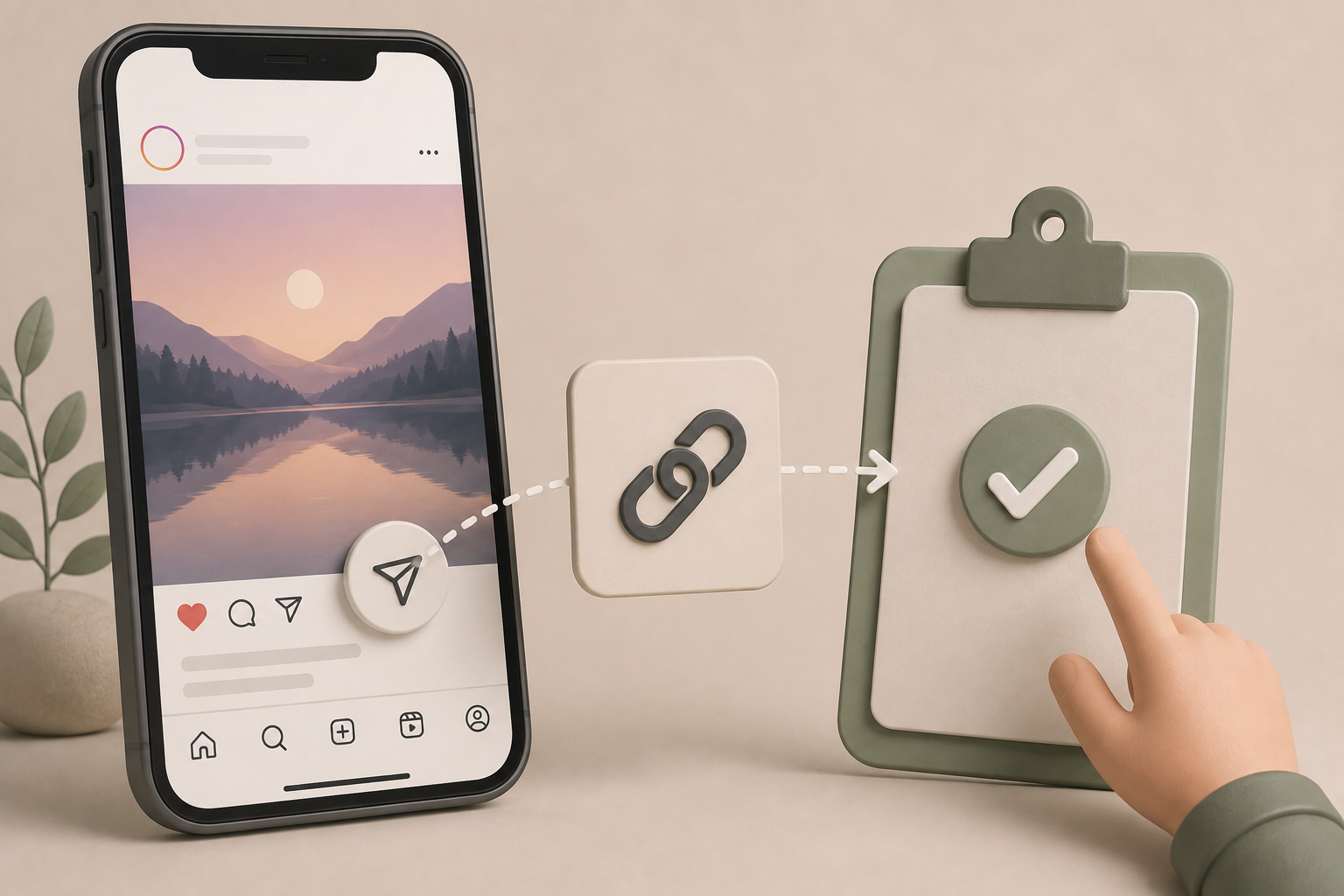
- You copy its link from Instagram.
- You paste that link into a downloader site or app.
- It fetches the Instagram video, extracts the audio track, and encodes it as MP3.
- You click Download and get an audio file.speechifyyoutube
Guides break this down step by step:
- On phone: open IG, tap three dots on the Reel, Copy Link → open a downloader → paste → convert → download MP3.youtubespeechify
- On desktop: copy the Reel URL from your browser → paste into a web‑based IG downloader → convert to MP3 → save.speechify
Tools and tutorials repeatedly describe this same pattern for Reels, IGTV, and stories.instagramyoutubespeechify
Key points:
- The converter pulls the original audio stream that Instagram is serving, not your phone’s speaker output.screenapp+1
- You skip the “record video first” step completely you go straight to an audio file.
- If the converter supports high‑bitrate MP3, you avoid a lot of extra quality loss.clideo+2
What screen recording actually does
Screen recording sounds simple: “just record the sound.” But under the hood, it’s messier:
- Your phone plays the Reel with audio.
- The system screen recorder captures video + audio of whatever is on your screen.play.googleyoutube+1
- That recording is saved as a compressed video file (often MP4).
- You then have to convert that video into MP3 in another step.youtubeclideoyoutube
Tutorials show you:
- On iPhone: start screen recording, play the Reel/audio, stop, then use a shortcut or app to “encode media → audio only → save file” as MP3.youtube
- On Android: turn on “screen record with audio,” play the Reel once, then feed the recording into a video‑to‑MP3 converter app or website.play.googleyoutube
- On desktop: use QuickTime or some screen recorder, then upload the file to Clideo/ScreenApp/another converter to extract MP3.screenapp+1
Every one of those steps is an encoding step. Clideo’s guide bluntly notes that MP3 is compressed, and converting recordings to MP3 means some quality loss is expected, though using higher bitrate settings can help.clideo
You’re also capturing:
- Background noise if you record with mic on.lifetips.alibaba
- App/system sounds if you forget to silence notifications.youtube+1
- Any volume changes you make while the Reel plays.
The niche angle nobody bothers to spell out
Almost no mainstream article connects these two:
- Instagram already compresses audio when you upload/play Reels.remasterify+2
- Screen recording compresses again, then MP3 conversion compresses again.reddit+2
So by the time you’re done, you’re at “third‑generation” audio. That’s why audio people talk about screen‑recorded tracks sounding dull, noisy, or just worse than the source.reddit
With a good converter, you often get “one extra encode” instead of two or three. Less damage, fewer steps, cleaner workflow.
COMPARISON WHAT'S ACTUALLY DIFFERENT BETWEEN YOUR OPTIONS
Reels‑to‑MP3 vs Screen Recording vs Screen Recording + Editor
| Option | What it actually does | Who it’s for | The catch |
| Direct Reels‑to‑MP3 converteryoutubespeechify | Uses Reel URL, pulls IG video, extracts audio, outputs ready‑to‑use MP3 | Anyone who wants clean-ish audio, fast | Needs a working downloader and public Reel; third‑party tools involved |
| Simple screen recording onlyyoutube+2 | Records screen + audio to a video file, you reuse that clip or rough‑convert later | People who are lazy, in a rush, or offline | Double compression, background noise, extra steps to get proper MP3 |
| Screen recording + full audio workflowclideo+2 | Record once, then trim and convert in Audacity/Clideo/ScreenApp at good settings | Legal‑cautious users, audio nerds who want full control | Slowest approach, still more compression, tools recommend not redistributing |
If you just want your favourite sound in a decent MP3, the Reels‑to‑MP3 converter wins on time and quality.screenapp+1youtubeclideo+1
If you’re paranoid about third‑party services touching your account, screen recording plus a proper editor is workable but you’re signing up for a longer, more fiddly flow.
WHAT ACTUALLY HAPPENS WHEN YOU TRY THIS
Let’s run both workflows the way you actually do them at 1 a.m.
When you use a Reels‑to‑MP3 converter
You:
Then:
- Open your browser.
- Search “download instagram reel audio” like every tutorial tells you to.youtubespeechify
- Pick one of the decent sites that says “paste link, hit download audio.”speechifyyoutube
You paste.
The site shows one input, one main button.
Maybe a couple of ads, but you’ve learned to avoid the fake download buttons because every creator warns you.youtube
You hit “Download audio/MP3.”
The file appears in your downloads. You tap it, it plays. The volume and clarity are close to what you heard in the app.screenapp+1
On your laptop, you drag that MP3 straight into your editor. Done.
The first time you do this, you realise it took less time than recording your screen and cropping the ends. The second time, your muscle memory starts to form: three dots → Copy link → paste → download.
When you screen‑record instead
You:
- Swipe to open the control centre or Quick Settings.
- Tap Screen Record.
- Hope you remembered to turn on “record audio” if you’re on Android, or that iOS is actually capturing system sound.play.googleyoutube+1
Then:
- Hit record.
- Play the Reel from start to finish.
- Try not to get a notification mid‑recording.
- Stop the recording.
Now you have a video file. Not audio.
So you:
- Open your Photos/Gallery.
- Find the recording.
- On iPhone, run that share‑to‑shortcut “encode media → audio only → save file” workflow someone taught you or you saw on YouTube.youtube
- On Android, push the recording into some Video to MP3 / audio extractor app.play.google+1
- On desktop, upload it to a converter like Clideo or ScreenApp, then download the MP3.clideo+1
Each of those guides reminds you: converting to MP3 is compressed, and some quality loss is normal try higher bitrates to keep more of it.clideo+1
You finally get your MP3.
Then you play it next to a direct download someone else used… and their version often sounds closer to the original. Yours carries that slight “recorded off another device” energy.
One thing that surprised me the first few times: how often screen recordings picked up unwanted stuff a faint app sound, a UI click, or just weird level changes compared to a straight MP3 download that just contained the track.youtubelifetips.alibaba+1youtube
Another pattern you only notice after doing both a few times: the Reels‑to‑MP3 path is the only one that doesn’t require you to listen in real time. With screen recording, you literally have to sit through the Reel while recording. With converters, it’s link → download → move on.
When you’ve actually lived the difference, screen recording stops feeling like a clever hack and starts feeling like a backup plan for when converters break or when you’re deliberately avoiding third‑party tools for legal reasons.
THE ADVICE EVERYONE GIVES VS WHAT ACTUALLY WORKS
1. “Screen record, then convert that way you don’t need any websites.”
This is the default TikTok‑style advice, and it’s half‑true. You do avoid external downloaders, but you:
- Add an entire extra step (record first, then convert).
- Capture whatever noise and compression your device adds.
- Still have to run the file through some converter (shortcut, app, or site) to turn it into MP3.youtube+1clideo
Converters like Clideo and ScreenApp exist specifically to turn recordings into audio, and they openly state that MP3 conversion involves compression. So you’re not really avoiding tools; you’re just shuffling which ones you use and when.screenapp+1
My take: screen recording + convert is fine as a backup. But as your main workflow, it’s slower and softer‑sounding than it needs to be.
2. “Downloading Reels audio might be unsafe screen recording is safer.”
Safety depends on what you’re actually worried about.
- If your concern is “I don’t want to log into my Instagram through some random site,” that’s fair and you’re right to avoid any downloader that asks for your credentials.speechify
- But most proper Reels‑to‑MP3 tools only ask for a link, not your login, and guides from neutral sources show exactly that flow.youtubespeechify
Legal‑cautious guides say screen recording can fall under fair‑use principles more cleanly because you’re not using automated scrapers at all you’re just capturing your own playback, then trimming offline. That’s a valid angle if you’re dealing with sensitive or spoken content and you promise not to distribute it.lifetips.alibaba
If your threat model is “I don’t trust random sites with my IG password,” then yes, avoid any downloader that wants it. If your threat model is “I don’t want my audio to sound like third‑generation soup,” screen recording is not the fix.
3.“All that matters is that you get the sound; quality doesn’t really matter for Reels.”
Tell that to the audio people freaking out because their tracks get crunchy on upload. There are entire posts about Instagram and TikTok compressing and distorting audio if you push levels or feed them bad files.reddit+2
A Reddit thread spells it out: screen‑recorded audio will sound worse compared to the original mp3, because you’re layering compression on compression. Another blog on fixing Instagram glitches recommends recording outside the app in better quality and managing levels, then uploading meaning the starting file still matters.remasterify+1
For throwaway memes, sure, quality isn’t the end of the world. But for hooks you’ll reuse, intros, or anything sitting under your voice, grabbing the cleanest possible MP3 is a small effort with a big payoff.
4. “Just use whatever’s fastest in the moment.”
Fast is relative.
- Screen recording feels fast because it’s built into your phone but it forces you to play the entire Reel in real time and then do another conversion step.
- A Reels‑to‑MP3 converter looks slower at first because you have to copy a link and paste it… but once you’ve done it twice, you realise it’s faster overall: no real‑time recording, no trimming.speechifyyoutube
The “fastest” method is the one you can repeat without thinking. For most people, that ends up being “copy → paste → download,” not “open control centre, start recording, play Reel, stop, locate recording, run through shortcut/app, pick a save folder.”
THE PRACTICAL PART WHAT TO ACTUALLY DO
Here’s how to set this up so you default to Reels‑to‑MP3 and only reach for screen recording when you actually need to.
1. Set up one go‑to Reels‑to‑MP3 workflow
Pick a reliable downloader that:
- Explicitly supports Instagram Reels and outputs MP3.
- Works in your browser (so it’s usable on phone and desktop).
- Does not ask for your IG login.youtubespeechify
Bookmark it on your phone and laptop. That’s your “audio tap.”
2. Practice the “copy link → paste → download” rhythm once
On Instagram:
- Open the Reel.
- Tap the share or three dots icon.
- Hit “Copy link.”instagram+1youtube
Immediately:
Do this 3–4 times in a row. Your fingers will remember it next time that one sound hits.
3. Only screen record for edge cases
Use screen recording when:
- Your usual downloader breaks on a specific Reel.
- You’re dealing with sensitive audio and don’t want any third‑party site touching it.
- The Reel is weirdly formatted and converters just error out.
Then follow the “clean” version of that flow:
- Record once in a quiet space, at sensible volume.youtubelifetips.alibabayoutube
- Import the recording into a proper tool (Audacity, Clideo, ScreenApp, etc.).
- Trim and extract audio at a reasonable bitrate, then export MP3.lifetips.alibaba+2
Treat it like surgery, not your default habit.
4. Avoid common screen‑recording disasters
If you do screen record:
- Put your phone in Do Not Disturb so no notification sounds get burned into the track.youtube+1
- Make sure system audio is actually being captured, not just your mic.play.googleyoutube+1
- Play the Reel once, cleanly, and stop don’t scrub, don’t jump. Easier to trim.lifetips.alibaba
Every one of those fixes is you fighting problems that simply don’t exist when you start from a clean MP3.
5. Keep your files organised so you aren’t redoing work
Once you have your MP3s:
- Dump them into a “Reels Audio” folder on phone / laptop.
- Name them with at least the creator or hook so you can search later. A legal‑minded guide even suggests names like “Reel_Username_Intro_20240522.mp3” for attribution.lifetips.alibaba
It sounds fussy. It saves you from re‑downloading the same sound five times.
QUESTIONS PEOPLE ACTUALLY ASK
Is a reels to MP3 converter better quality than screen recording?
Usually, yes. A converter pulls the audio stream directly from Instagram’s video, then encodes it once as MP3. Screen recording captures an already compressed stream, compresses it again into a video file, and then you compress that when you convert to MP3. Audio engineers note that screen‑recorded music does sound worse than the original, especially after multiple encode steps.reddit+2youtubespeechify
Does screen recording lower the sound quality from Instagram reels?
It often does. When you screen record, your device saves a compressed video file that includes audio, and that process can introduce extra artifacts or changes in level. Then converting that recording to MP3 is another compression step, which guides like Clideo warn will always involve some quality loss. Compared to a direct MP3 extraction, that’s one or two more chances to damage the sound.reddit+2
Why not just always screen record instead of using a downloader?
You can, but it’s slower and messier. Screen recording forces you to play the Reel in real time, then locate the recording, then convert the video to audio with a shortcut, app, or website. Direct Reels‑to‑MP3 converters let you paste a link and download an audio file without recording anything, which is faster once you know the steps.youtubeclideoyoutubespeechify
Is it safer to screen record reels audio than to use a reels to MP3 converter?
Safer in which sense? If you’re worried about logging into Instagram on third‑party sites, then yes you should avoid any downloader that asks for your username and password. But many reputable tools only need a URL, and neutral guides show that copy‑link → paste → convert flow as standard. Some legal guides prefer screen recording plus offline trimming because it avoids automated scraping and stays closer to fair‑use practices, especially when you never upload or redistribute the audio.lifetips.alibabayoutubespeechify
Can I turn a screen recording of a reel into MP3 later?
Yes. Tutorials show you how to use iPhone Shortcuts to “encode media → audio only → save file” from any video or screen recording. On Android and desktop, you can feed recordings into video‑to‑audio tools like Clideo, ScreenApp, or dedicated Video to MP3 apps. Just remember that each conversion adds compression, so it’s a workable backup but not the cleanest starting point.play.google+2youtube
When should I use a reels to MP3 converter instead of screen recording?
Use a converter whenever you want the cleanest possible audio with the fewest steps: trending sounds for edits, hooks for intros, or anything you’ll reuse. Save screen recording for edge cases private/sensitive clips, broken downloaders, or when you explicitly want to avoid any third‑party scraping and are okay with trimming manually later.screenappyoutubelifetips.alibaba+1
Does Instagram’s own download feature make converters or screen recording pointless?
Not really. Instagram lets users download public Reels to their camera roll, but that saves a watermarked video with attribution, not a clean MP3. You still need either a converter or an editor to extract audio from that file if you only want sound. It’s helpful, but it doesn’t replace dedicated audio extraction.timesofindia.indiatimes+5
Is using a reels to MP3 converter legal?
It depends what you do with the audio. Guides that talk about Instagram audio download remind you to respect copyright and use tracks mainly for personal use or very low‑risk content. Legal‑focused advice around screen recording stresses the same thing: even if you record manually, you shouldn’t redistribute or commercially exploit the audio without rights. Converters don’t give you extra rights; they just give you a file.webveda+4
SO WHERE DOES THIS LEAVE YOU
So no, you’re not “doing it wrong” if you screen record. You’re just choosing the long, slightly worse‑sounding route when there’s a shorter one three taps away. A Reels‑to‑MP3 converter pulls audio closer to the source, skips the whole “record a video first” dance, and hands you something your editor actually wants.reddit+2youtubespeechify
Screen recording still has a job: when downloaders break, when you don’t want any automated tools touching your content, or when you’re capturing something sensitive that you plan to clean up privately and never repost. But treating it as the default for every trending sound is like filming your TV with your phone instead of just pressing download. It works. It’s just unnecessary pain.screenappyoutubelifetips.alibaba
If you do one concrete thing today, do this: take one Reel, capture the audio both ways once with a screen recording, once with a Reels‑to‑MP3 converter and listen to both files in good headphones. Keep whichever method sounds cleaner and feels less annoying. My money is on the converter.
You don’t have to be an audio engineer to notice the difference. Just someone who’s tired of making Reels harder than they need to be.
You made it to the end, which already means you care about your audio more than “I’ll just screen record it, it’s fine.” Now you know exactly what each method does to your sound, how many hoops you’re jumping through, and where the quality quietly disappears.
Next time a Reel audio hooks you, you won’t automatically dive for the screen recorder icon. You’ll have options, you’ll know which one keeps your sound cleaner, and you’ll have a backup plan when the “proper” way breaks. That’s about as organised as social‑media chaos ever gets.
If nothing else, at least your notifications won’t be immortalised in your next edit.